Oct 23, 2026
Alginate COA, SDS, and Transport Documents: What Buyers Should Request
Essential guide for importing alginate from China. Audit batch COAs, GHS 16-section SDS files, and safe non-hazardous transport certificates before paying deposits.
Why Documentation Verification Precedes the Purchase Order
When importing dental and life-casting alginate from China, technical and commercial documents protect your business just as much as physical product quality.
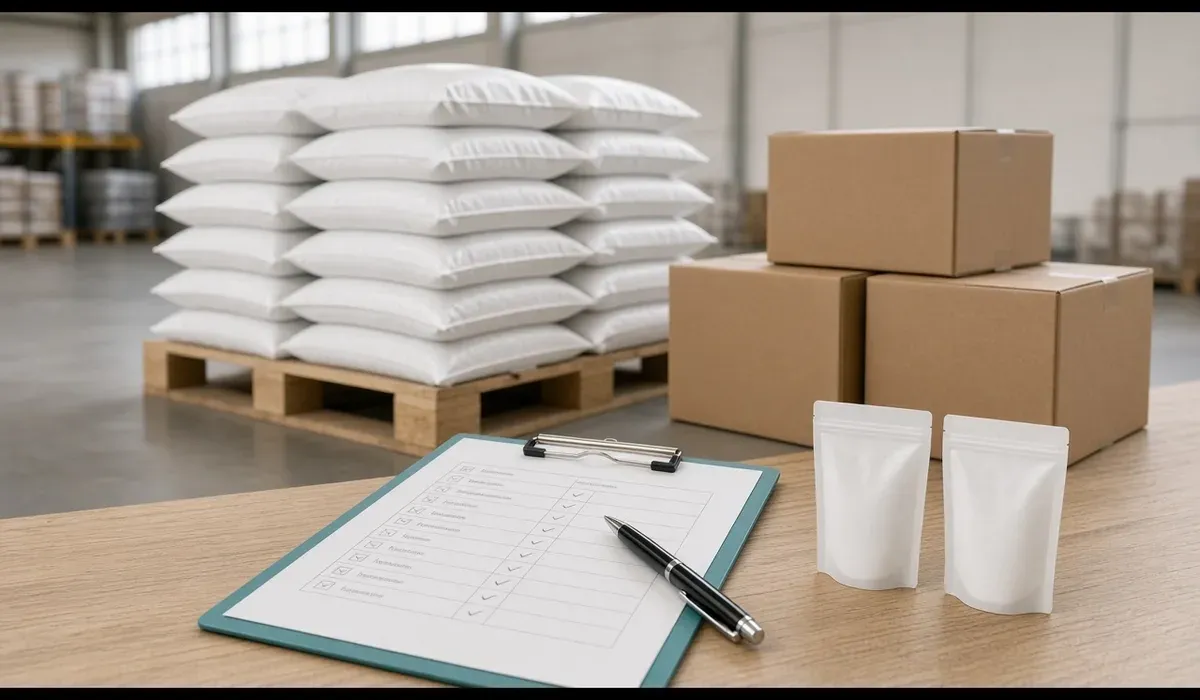
Alginate is shipped as a fine industrial or medical powder. Without the proper documentation package, consignments can face severe operational roadblocks: freight forwarders may mistakenly categorize standard powders as hazardous materials (triggering steep dangerous goods surcharges), customs inspectors may hold containers pending chemical composition proof, and local health authorities may block distribution to clinics.
Before transferring your commercial deposit, professional distributors and brand owners must confirm that the supplier provides a standardized, batch-verifiable paperwork package.
The 3 Essential Technical Documents for Alginate Importation
Every overseas shipment of Algident alginate relies on three foundational technical documents. Each serves a distinct regulatory and operational milestone:
Document | Primary Function | Typical Issuing Stage | Key Verification Checkpoint |
|---|---|---|---|
Batch COA (Certificate of Analysis) | Quality verification & clinical parameter proof | Issued per manufacturing lot upon QC release | Batch number must match pouch and carton ink-jet codes exactly |
SDS / MSDS (Safety Data Sheet) | Workplace safety, toxicity clearance & customs filing | Annual / formula-level document (16 standardized sections) | GHS classification confirms non-toxic, non-corrosive composition |
Safe Transport Conditions Identification | Carrier booking & airline/shipping line clearance | Annual third-party laboratory appraisal (DGM/chemical testing) | Explicit conclusion: "Not Restricted / Not Subject to Dangerous Goods Regulations" |
How to Audit Each Document Before Approving Shipment
1. Batch Certificate of Analysis (COA)
A legitimate COA is not a generic marketing spec sheet; it is a live laboratory report confirming the physical properties of your specific production lot:
- Batch Number and Manufacturing Date: Verify that the lot code on the COA precisely mirrors the stamped date and batch on the individual 500 g foil pouches and outer shipping master cartons.
- Physical Performance Parameters: Ensure key performance metrics conform to international dental standards (such as ISO 21563 / ADA No. 18):
- Setting Time: Typically around 3 minutes for Universal Dental Alginate, or 4 minutes for Life Casting formulations.
- Detail Reproduction: Minimum line transfer capacity (e.g., 20 μm for High Precision grades).
- Elastic Recovery: Minimum recovery threshold (typically 97%–98% or higher).
- Compressive Strength & Strain-in-Compression: Confirms resistance to tearing during patient demolding.
2. 16-Section Safety Data Sheet (SDS)
Compliant with the Globally Harmonized System (GHS), an authentic SDS provides local customs, port authorities, and warehouse personnel with occupational safety disclosures:
- Section 3 (Composition & Ingredients): Confirms primary components (potassium or sodium alginate, calcium sulfate, diatomaceous earth filler, and non-toxic pH indicators). It provides proof to local medical device boards that the formula contains no heavy metals or restricted biological agents.
- Section 7 (Handling & Storage): Explicitly states climate parameters (store below 25°C in dry, ventilated conditions), establishing liability baselines for warehouse storage.
- Section 14 (Transport Information): Verifies that the substance is unclassified under UN Dangerous Goods Codes (Not Subject to ADR/RID, IMDG, or IATA regulations).
3. Safe Transport Conditions Appraisal (Air & Ocean)
Because fine powders can resemble restricted chemical compounds to airport scanners and port screening units, third-party chemical appraisal certificates are mandatory:
- Preventing False "Dangerous Goods" (DG) Surcharges: International carriers charge significant penalty surcharges for uncertified chemical powders. A certified non-hazardous appraisal enables booking under standard, low-cost general cargo ocean and air freight rates.
- Customs Green-Channel Clearance: Smooth customs clearance in transit hubs requires active transport documentation with legitimate lab authorization.
Matching Documents to Your Procurement Timeline
To prevent container detention and demurrage expenses, align document requests with each phase of your order:
- Initial Inquiry & Sample Phase: Request sample-lot COAs and current product SDS copies to verify technical parameters and satisfy local import registration requirements before committing capital.
- Production Completion & QC Phase: Review the official batch COA and packing list issued for your exact shipment. Confirm that carton quantities, gross weights, and lot numbers match your Proforma Invoice.
- Bill of Lading & Commercial Dispatch: Ensure the freight forwarder receives the Ocean Transport Certification alongside the Bill of Lading (B/L), Commercial Invoice, and Certificate of Origin (COO / Form E) for seamless clearance at your destination port.
Build a Frictionless Import Workflow with Algident
At Algident, rigorous quality documentation is an integral component of our export manufacturing process. We ensure every wholesale container and trial pallet departs factory dispatch with fully auditable, verifiable technical documentation.
- Plan Your Initial Shipment: Review our step-by-step checklist on First Trial Order of 720 Bags: What to Verify Before Deposit.
- Regional Freight & Customs: If you are importing into East, West, or Southern Africa, explore our dedicated guides on African Port Freight Lead Times and Shipping Alginate to Africa: Freight and Documents.
- Review Technical Quality Standards: Discover our internal batch testing and quality protocols on the Algident Technology page.
Ready to review technical documentation for your upcoming shipment?
Contact our export trade desk to request current batch COAs and SDS files:
WhatsApp: +86 180 1638 1172 | Email: info@algident.com
Algident · Shanghai Even Medical Instruments Co., Ltd.