Oct 26, 2026
Couple Hand Casting Failures: What Studios Should Check Before Repeating a Session
Diagnosing couple hand casting failures: air pockets in interlocked fingers, container sidewall touching, water temperature premature gelation, extraction technique, and prompt pouring.
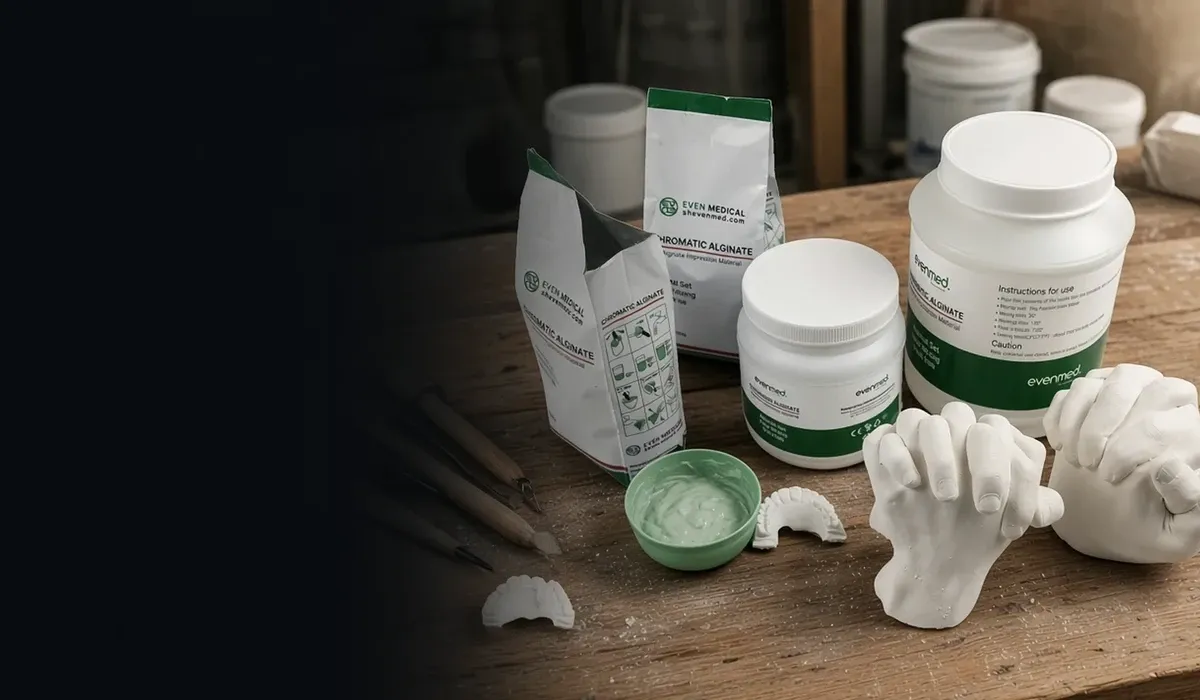
In professional life casting studios, couple hand casts are among the most popular and emotional commissions. Yet for studio owners and kit assemblers, paired hand impressions also present the highest failure rate.
Unlike a single hand cast, a couple cast doubles the anatomical complexity: interlocking fingers create tight air entrapment zones, two different skin temperatures interact in the mold, and nervous tension often causes micro-movements during the critical gelation phase.
When a couple hand casting fails—resulting in snapped fingers, rough chalky surfaces, large voids, or tearing during extraction—technicians often instinctively blame the molding powder. In commercial practice, however, over 90% of failures stem from predictable procedural missteps.
Before booking a costly repeat session and expending fresh material, studio technicians and craft instructors should run through this diagnostic checklist to isolate the root cause.
1. Interlocking Fingers and "Under-Wrist" Air Pockets
The most common failure in couple castings is large voids or missing fingertips where the hands join.
- The Mechanism: When two people clasp hands tightly in a traditional prayer or intertwined grip, deep blind cavities form between their palms and beneath their folded fingers. As viscous alginate paste rises around the hands, air is trapped inside these pockets and cannot escape upward against the sinking hydrocolloid mass.
- The Solution:
- Instruct clients to adopt a relaxed, open handhold rather than squeezing tightly. A "holding thumb and wrist" or loose palm-to-palm touch allows slurry to circulate freely.
- Prior to full immersion, apply a generous handful of mixed alginate directly into the palm junction, massaging the paste between fingers to displace air pockets before plunging the hands into the container.
2. Inappropriate Container Dimensions and Sidewall Touching
When hands drift too close to the edge of the mixing bucket, the cast frequently suffers from flat, distorted skin surfaces or mold blowout during stone pouring.
- The Clearance Rule: A minimum clearance of 2.5 to 3.5 cm (1 to 1.5 inches) must be maintained between the skin and all container surfaces (bottom, sidewalls, and liquid surface).
- The Failure Mode: If knuckles, knuckles, or fingertips touch the bucket wall while the hydrocolloid sets, the alginate layer at that contact point is compressed to near-zero thickness. When hands are later extracted, this ultra-thin section tears or distorts permanently, causing plaster leakage during casting.
- Studio Check: Always perform a "dry run" inside the empty container. Have the couple practice their pose inside the dry bucket to verify that their joint hands fit comfortably without contacting the sides or rim.
3. Water Temperature and Premature Gelation
Alginate setting chemistry is directly governed by water temperature. For life casting formulations, the standard setting benchmark is calibrated to approximately 4 minutes under controlled room conditions (20°C / 68°F).
- The Trap: During summer months or when using warm tap water (>24°C / 75°F), the cross-linking reaction between soluble alginate and calcium ions accelerates drastically. The material can begin to gel while the couple is still adjusting their finger placement.
- The Consequence: Submerging or shifting hands into alginate that has already initiated gelation tears the forming polymer fibrils. The resulting mold displays severe shear fractures, delamination, and powdery, crumbled textures around the wrists.
- Best Practice: Use a digital culinary thermometer to verify mixing water temperature. In warm studio climates, using slightly chilled water (18°C–20°C) extends working time safely without altering the final mold elasticity.
4. Panicked or Premature Hand Extraction
Extracting two adult hands from a cured hydrocolloid mold requires deliberate technique. Panicked tugging inevitably breaks the delicate alginate bridges between interlocked fingers.
- Wait for Full Cure: Never begin extraction the moment the alginate feels rubbery on the surface. Allow a full 60 to 90 seconds of post-set curing beyond initial gelation to let the irreversible hydrocolloid reach optimal tear strength and elastic recovery.
- Breathe the Mold: Before pulling upward, gently wiggle the wrists to break the vacuum seal around the forearm skin. Allow air and a trickle of water to seep down along the wrists into the mold cavity.
- Coordinated Motion: Clients must relax their fingers completely and let the studio technician guide the motion. One partner gently withdraws first or both slide out in unison along the natural angle of insertion, rather than twisting sideways against the undercut plane.
5. Delayed Stone Pouring: Syneresis and Shrinkage
Even when an impression is captured flawlessly, models frequently emerge with loose joints or dimensional distortion due to pour delays.
- Material Science Reality: Dental and life casting alginates are hydrophilic water-based gel networks containing up to 70% water by weight. Once exposed to ambient air, alginate immediately undergoes syneresis—the spontaneous exudation of liquid droplets accompanied by volume shrinkage.
- The Pour Window: For maximum surface detail and dimensional fidelity, pour the high-strength casting stone (such as Type III or Type IV gypsum) within 15 to 30 minutes of extraction.
- Temporary Holding Protocol: If immediate pouring is impossible due to back-to-back studio sessions, wrap the entire mold in a damp, lint-free microfiber towel and seal it inside an airtight plastic bag or container. Never submerge the mold in standing water, as this triggers imbibition swelling.
Quick Diagnostic Matrix for Studio Quality Audits
Observed Casting Defect | Probable Root Cause | Corrective Action for Next Session |
|---|---|---|
Deep voids / missing finger tips | Trapped air pockets in interlocked fingers | Pre-coat palms by hand; use a looser, relaxed hand pose |
Flat, untextured knuckles or wrists | Hands touched bucket sidewall | Increase container diameter; maintain 3 cm clearance |
Crumbled, grainy surface / shear tears | Warm water caused premature gelation | Measure water temp (18°C–20°C); avoid stirring past working time |
Fingers snapped off inside alginate | Forcible removal before vacuum release | Add water lubricant at wrists; break vacuum before sliding out |
Chalky, soft plaster surface | Delayed pour or excess standing water in mold | Pour stone within 30 min; drain pooled moisture thoroughly |
Studio Inventory: Selecting the Right Alginate Powder
Running a profitable life casting studio or DIY kit business requires dependable raw materials with predictable setting curves and consistent batch-to-batch flow.
- For life casting workshops, kit brands, and bulk studios, discover our specialized formulations on the Life Casting Alginate Overview.
- Planning a commercial product launch? Read our guide on Alginate Hand Casting Kits Retail Packing & Material Ratios.
- To calibrate precise powder requirements by container volume, consult our How Much Alginate for Hand and Foot Casting dosing benchmark.
Inquire About Bulk Life Casting Alginate Supply
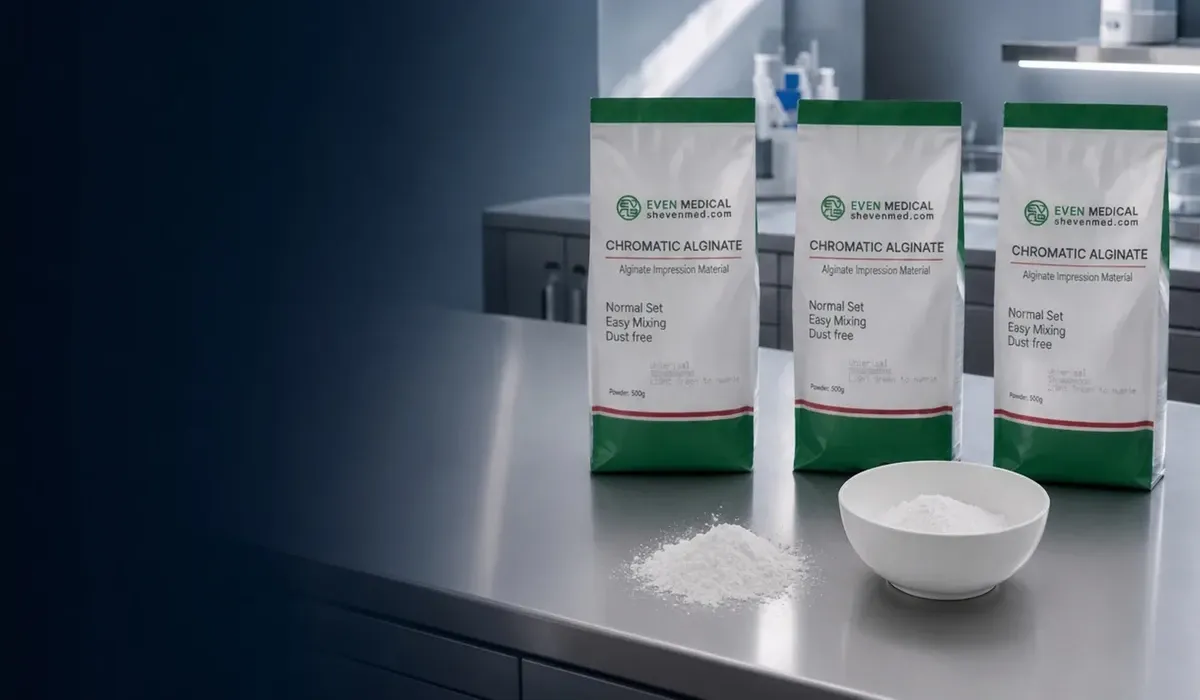
Algident supplies export-grade, non-toxic, skin-safe life casting alginate powder in 453 g / 500 g retail pouches, 1 kg refill packs, and 20 kg bulk drums for studios, sculptors, and kit brands worldwide.
Request specification sheets and wholesale quotation:
WhatsApp: +86 180 1638 1172 | Email: info@algident.com
Algident · Shanghai Even Medical Instruments Co., Ltd.