Oct 16, 2026Buying Guides
Chromatic vs Standard Alginate: Which Should Your Clinic Stock?
Stocking chromatic vs standard alginate: same mold quality, different visibility. Decide by staff stability and catalog positioning — see also the remakes case.
Same Alginate, Different Workflow
Chromatic and standard alginate share the same base chemistry: both set by the same reaction, both reach 20 μm detail reproduction, and both carry the same 3-year shelf life. The difference is not in the mold — it is in how the operator sees the process. This article is a stocking decision for clinics and distributors. For the remake-rate case and chair-time math, see Why Chromatic Alginate Reduces Remakes in Busy Clinics.
WHAT CHROMATIC ADDS
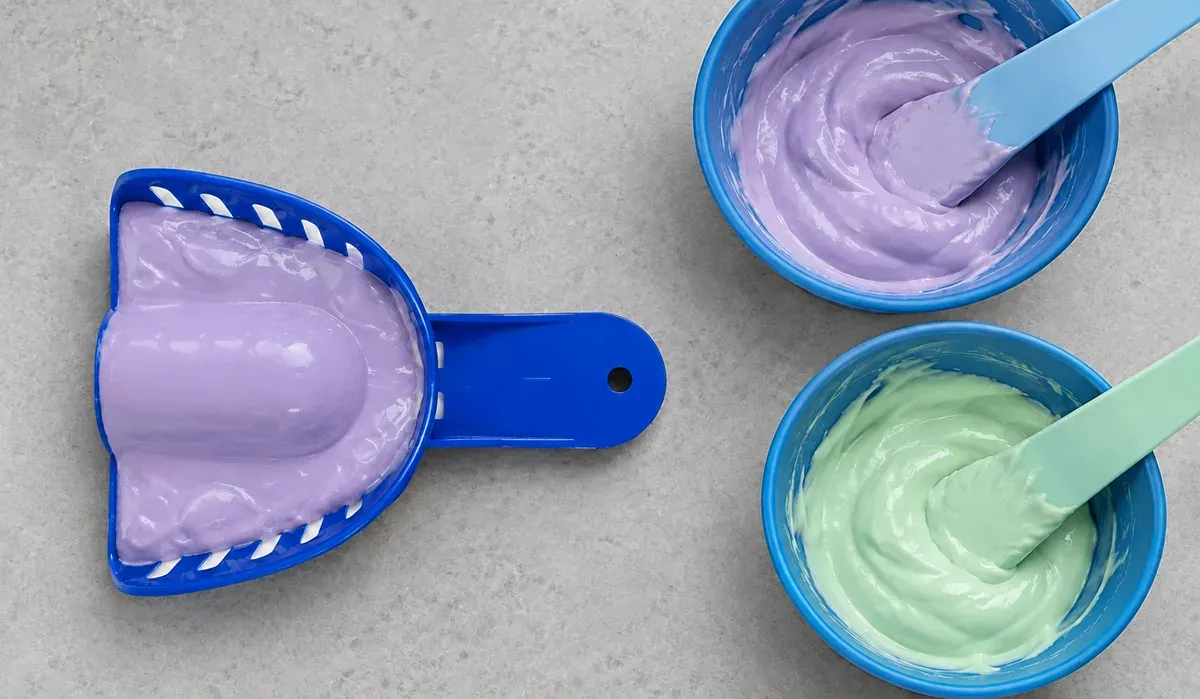
Standard alginate gives you one working window and a clock. Chromatic alginate replaces the clock with visible phase changes:
- Mix phase: one color while blending — you can confirm a smooth, homogeneous consistency.
- Load & seat phase: a second color signals the loading window.
- Set phase: a third color confirms complete setting, safe to remove.
For experienced operators the value is confirmation. For new staff and training environments the value is much larger: the material itself teaches the timing.
SIDE-BY-SIDE COMPARISON
- Workflow clarity: chromatic wins — color cues remove timing guesswork.
- Staff training: chromatic shortens the learning curve for new assistants.
- Remake risk: fewer timing mistakes when staff rotate (see the remakes article for the clinic case).
- Pricing: chromatic carries a modest premium per bag.
- Final mold quality: identical — same 20 μm detail, same strength.
WHAT WE RECOMMEND STOCKING
High-volume clinics with stable, trained staff can stock standard grades and price aggressively. Clinics with rotating staff, training programs or premium positioning should stock chromatic — fewer remakes repay the premium quickly.
Distributors: stock both. Standard grades compete on price; chromatic differentiates your catalog and supports training-focused customers.