Oct 23, 2026Dental Guides
Why Chromatic Alginate Reduces Remakes in Busy Clinics
Chromatic visual cues guide mixing, tray loading, and seating in busy dental practices. Learn how color phase shifts reduce timing remakes and standardize assistant workflows.
The Real Cost of a Failed Impression
Every remake costs a clinic twice: the material itself, and the chair time. Most alginate failures come from timing errors — loading too late, seating at the wrong moment, or removing the tray before full set.
COLOR TELLS YOU WHAT A TIMER CANNOT
Chromatic alginate changes color at each critical stage:
- Mix phase — the material holds its mixing color while you blend to a smooth consistency.
- Load & seat phase — the color shift signals your window to load the tray and seat it in the mouth.
- Set phase — the final color confirms complete setting, safe to remove and pour.
Assistants do not need to watch a clock or memorize timing tables. The material itself communicates readiness — which is exactly why busy clinics and training colleges report fewer remakes after switching.
THE SAME LOGIC SELLS AT RETAIL
For life-casting sellers, color guidance matters even more: their customers are parents, not dental professionals. A kit that "tells" a nervous first-timer when to place the hand dramatically improves success rates — and repeat purchases.
CONSISTENCY AT SCALE
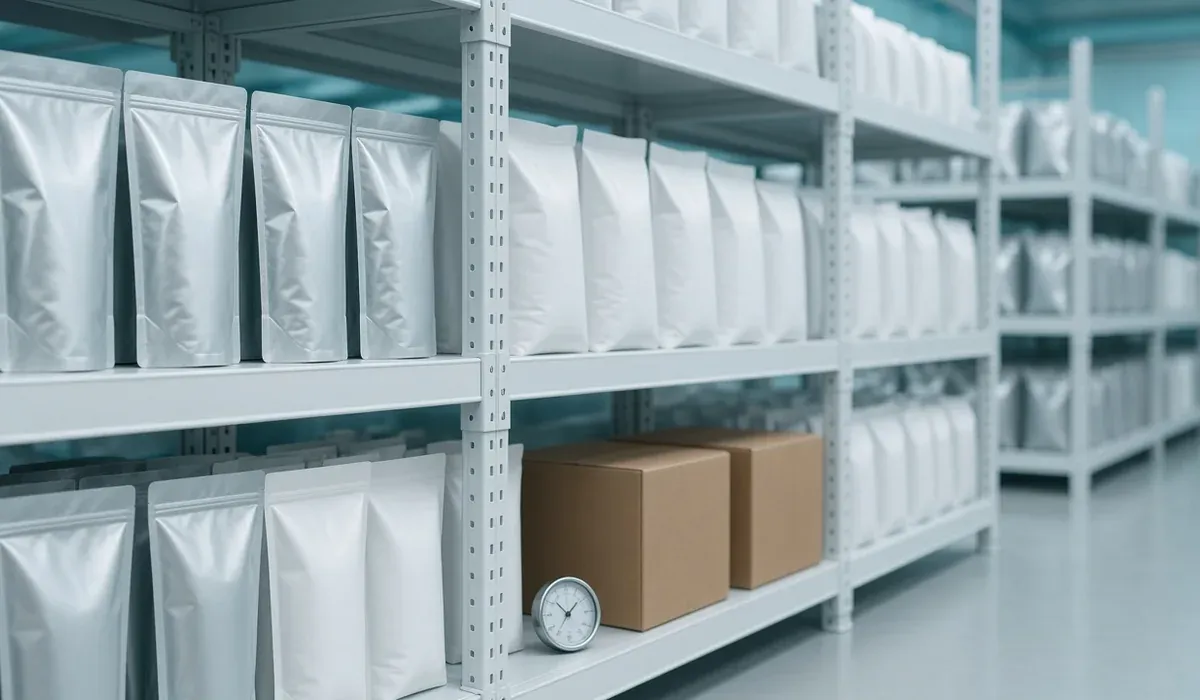
Our chromatic formulations are batch-stable: the color stages occur at the same times, batch after batch, verified by COA on every production run. That predictability is what allows wholesalers to promise consistent quality to hundreds of clinics.
Request chromatic alginate samples via WhatsApp +86 180 1638 1172, or contact us for a factory quote.The Real Cost of Impression Remakes in Clinical Practice
Every impression remake incurs a double penalty: the immediate waste of material and the far more expensive loss of chair time. In multi-chair dental practices and university training hospitals, repeated impressions cause severe schedule disruption—assistants re-mix under pressure, appointment blocks overflow, and patients experience avoidable discomfort.
Most routine alginate failures stem from timing errors rather than chemical defects in the powder:
- Loading the tray too late: The mix enters its initial gelation stage while being transferred, creating severe surface drag, internal stress lines, and tearing upon removal.
- Seating at the wrong consistency: Seating too early when the viscosity is too low causes excessive flow down the pharynx; seating too late destroys fine margin detail.
- Premature mouth withdrawal: Demolding before full intraoral setting results in permanent elastic deformation and distorted tooth arches that laboratories reject.
While wall clocks and timers help, fast-paced operatory environments frequently distract staff. Chromatic alginate is engineered so that the material itself provides intuitive visual cues at each critical working stage.
What “Chromatic” Visual Guidance Means in Practice
Algident chromatic dental alginate utilizes a food- and medical-grade indicator system that transitions through distinct color phases as the chemical setting reaction advances:
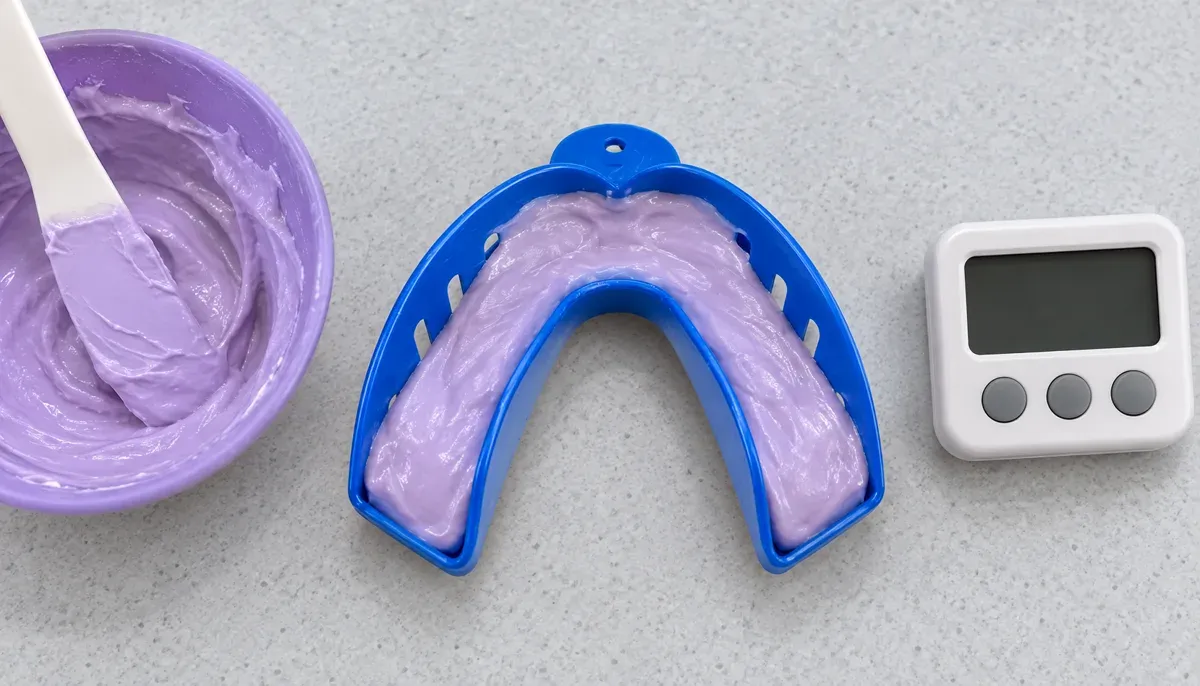
- Mixing Phase (Initial Color — e.g., Violet/Purple): The powder and water blend into a smooth, homogenous paste. The distinct initial color signals that active wetting and particle breakdown are underway.
- Loading & Seating Phase (Working Transition — e.g., Pink): The color shift clearly indicates the ideal rheological window. The paste has achieved optimal flow to capture mucosal details and margin lines without premature stiffening.
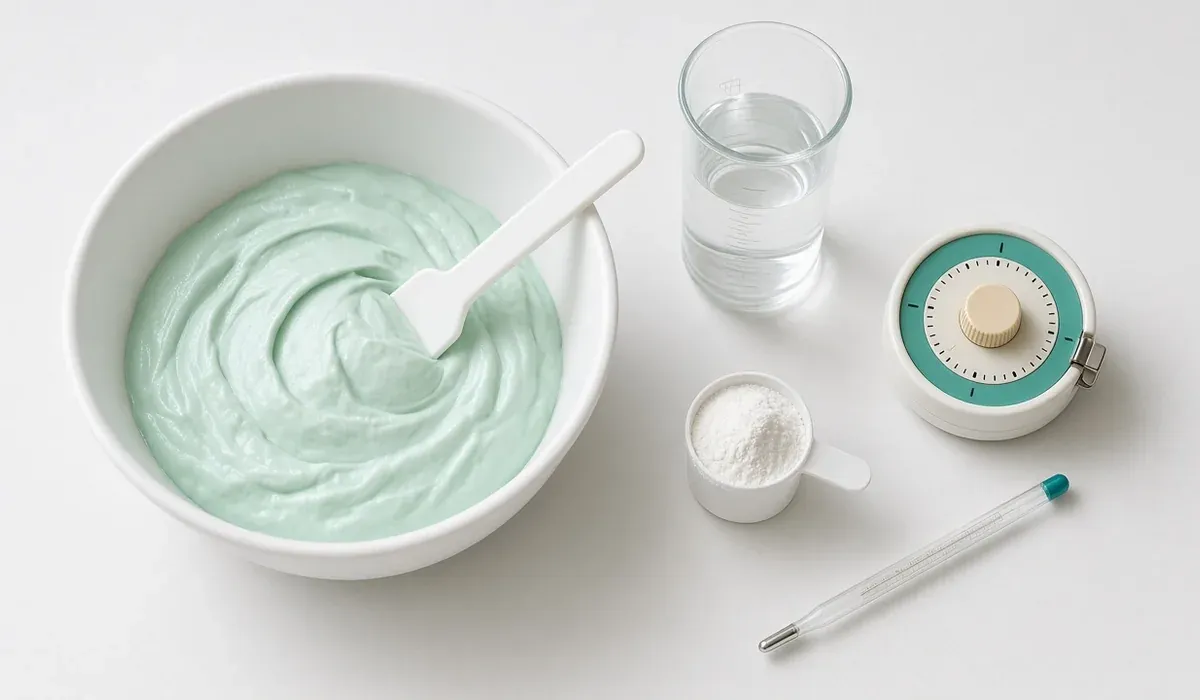
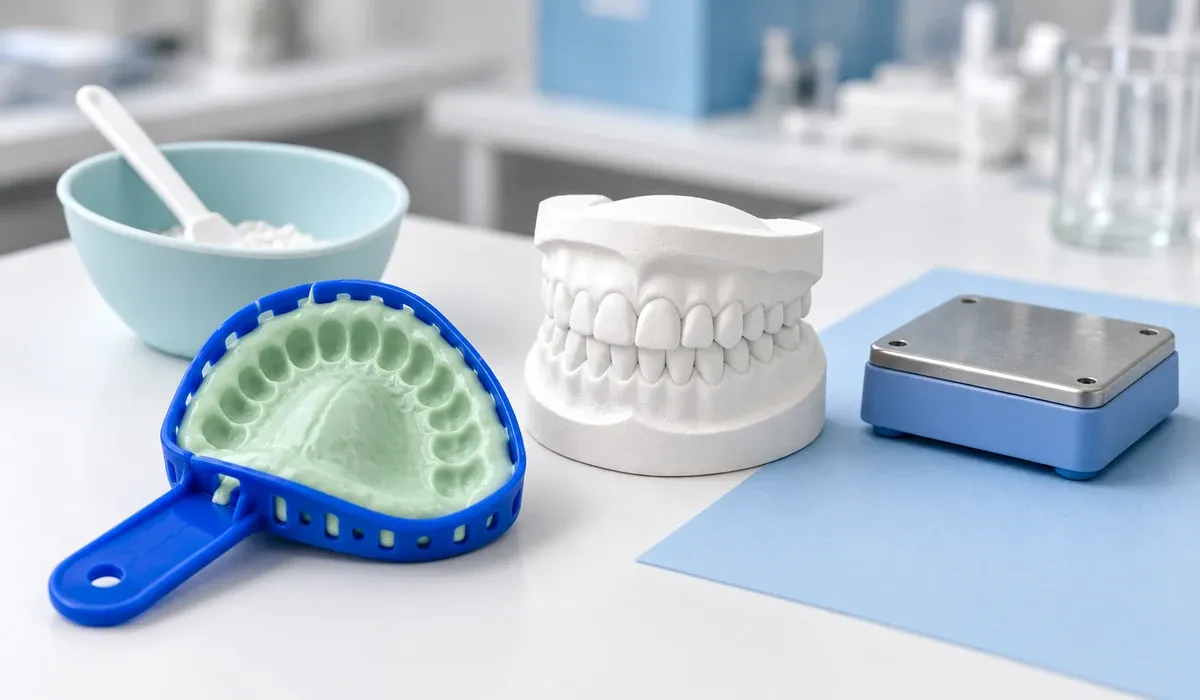
- Set Phase (Final Color — e.g., Pale Mint Green): The completed color transition signals full cross-linking and elastic recovery, indicating that the tray is safe to gently release from intraoral undercuts.
Clinical Reality Check: Visual color indicators provide an invaluable operational cue, but they do not replace batch-specific Instructions for Use (IFU). Ambient room temperature and water temperature will accelerate or retard both the chemical reaction and the color shift. Chromatic cues show clinical staff exactly how the working window is moving in real time, rather than leaving them to guess.
Dust-Free Formulation: What Distributors Should Explain to Clinic Buyers
When dental supply distributors introduce chromatic alginate to clinic directors, pairing color guidance with a dust-free formulation provides a compelling clinical rationale:
- Cleaner Operatory Air: Conventional alginate powders can aerosolize during scooping and dispensing. Dust-free processing treats particle surfaces to significantly reduce airborne powder float, maintaining clean bracket trays and protecting staff respiratory comfort.
- Accurate Powder Dispensing: Less dust loss during transfer means the actual weight entering the mixing bowl matches the volumetric scoop, preventing involuntary high powder-to-water ratios that cause brittle casts.
- Professional Reassurance: While "dust-free" minimizes environmental dispersion, responsible distributors should remind clinic staff that standard clinical PPE (masks and protective eyewear) remains good practice.
Pairing Chromatic Cues with the Right Dental Grade
Color change does not alter the fundamental mechanical grade of the material; it ensures that each grade performs consistently in daily use:
Clinical Requirement | Recommended Grade | How Chromatic Guidance Helps |
|---|---|---|
Study models, opposing arches, orthodontic records | Universal Alginate | High chair turnover; total setting time ~3 min; visual cues cut rushed timing mistakes. |
Precision study casts, partial denture frameworks, clear aligner models | High Precision Alginate | 20 μm detail reproduction; ensures seating happens precisely during peak flow. |
Crown and bridge study models, implant preliminary casts | Super High Precision Alginate | Stringent restorative benchmarks; confirms full intraoral elasticity before demolding. |
Water-to-Powder Ratio and Temperature Discipline
For consistent clinical results, always confirm the specific water-to-powder ratio published on the applicable product foil packaging and batch IFU (typically within the range of 10 g powder to 20–22 mL water).
Water temperature directly impacts setting speed: warm water (above 23°C) shortens both working and setting phases, while cold water extends them. With chromatic alginate, the color shift accelerates proportionally with warm water, immediately alerting the dental assistant to load and seat without delay.
In-Office Demonstration Script for Sales Teams
When demonstrating chromatic alginate in front of clinic decision-makers and lead dental assistants, avoid generic product brochures. Run a practical 3-minute tabletop demonstration:
- Demonstrate Dust Control: Scoop dry powder vigorously into a clean mixing bowl to show minimal airborne dust compared to conventional commodity powders.
- Observe Smooth Wetting: Add room-temperature water according to the IFU ratio. Mix vigorously with a flexible spatula; point out how the violet/purple paste stays consistent without dry pockets.
- Highlight the Flow Transition: As the mix shifts to pink, load a demonstration upper-arch tray. Show that the paste holds on the tray without dripping, yet flows smoothly under slight compression.
- Inspect the Elastic Set: As the material shifts to its final pale mint green, wait the specified setting duration, then flex and release the impression surface to demonstrate clean rebound and tear resistance.
Standardizing Your Clinic Supply Chain
For dental clinics seeking to cut remake expenses, switching to chromatic alginate standardizes procedures across rotating dental assistants and hygienists.
- Evaluate on Chair: Distribute sample bags to your highest-volume operatories. Track impression rejection rates over a two-week trial against your existing inventory.
- Match Your Clinical Portfolio: Explore our Universal Dental Alginate for everyday clinical workflows, or review our guide on Chromatic vs. Standard Alginate: Which to Stock.
- Troubleshoot Existing Remakes: Review our diagnostic checklist on 7 Causes of Alginate Remakes Clinics Blame on Powder to eliminate tray selection and pouring errors.
- Explore Technical Principles: Learn more about formulation controls and batch testing on our Algident Technology page.
Ready to test chromatic alginate in your practice or distribution network?
Contact our export specialists for batch COA and clinical sample kits:
WhatsApp: +86 180 1638 1172 | Email: info@algident.com
Algident · Shanghai Even Medical Instruments Co., Ltd.