Oct 26, 2026Buying Guides
Alginate vs Silicone Impression Material: When Clinics Still Choose Alginate
Alginate or silicone (PVS)? Compare intended uses, pouring arrangements, handling and purchasing checks before choosing impression materials for your clinic.
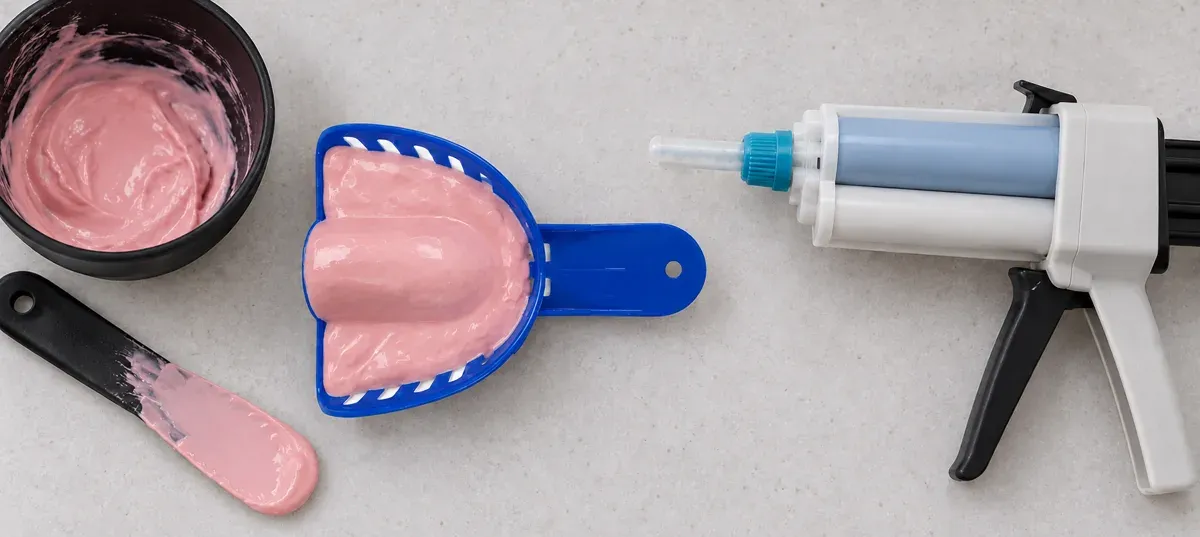
Choose an impression material by the required record and the laboratory workflow. Alginate remains an option for study models, opposing arches and preliminary impressions where the selected product is indicated. Addition silicone, often called PVS or VPS, is commonly used for restorative impressions and workflows requiring a product-specific delay before casting. Neither material name alone establishes suitability for every case.
For distributors, the useful question is: what must the clinic record, and what happens to the impression next? This guide compares those purchasing decisions rather than promising a universal accuracy or cost advantage.
1. Match the Material to the Required Record
Alginate is an irreversible hydrocolloid; addition silicone is an elastomer. Their different material behavior matters, but the clinician's indication and the supplied instructions come first. This comparison concerns addition silicone, not every material sold under the broader silicone name.
Buying question | Alginate | Addition silicone (PVS/VPS) |
|---|---|---|
What record is needed? | Consider an indicated dental alginate for study, orthodontic, opposing-arch or preliminary records | Consider an indicated PVS system for the restorative impression or other prescribed technique |
When can the laboratory cast? | Confirm the permitted handling and pouring window before selecting the product | Confirm both the earliest and latest permitted casting times; they vary by product |
What equipment is required? | Product-specific powder and water measures, bowl and mixing method | Compatible cartridges and tips, dispensing equipment, or a specified hand-mixed system |
Is another model required? | Do not assume a second pour is validated | Check the selected system's instructions; multiple pours are not a category-wide guarantee |
Manufacturer guidance illustrates why product selection matters. The Jeltrate alginate instructions describe study, orthodontic and opposing models and exclude final impressions for fixed restorations. This is an example from another manufacturer, not an Algident indication or parameter sheet. Always confirm the chosen product's intended use.
A higher grade name or a fine-detail specification does not, by itself, make an alginate suitable for a final crown, bridge or implant impression. Discuss those requirements with the clinician and laboratory.
2. Check the Pouring Plan Before Comparing Prices
A clinic that casts models on site has a different purchasing problem from a clinic that sends impressions to an external laboratory. Record the actual handoff, transport conditions and expected casting time before recommending a material.
Alginate impressions can change dimensions through water loss or uptake. Follow the applicable instructions for cleaning, disinfection, interim storage and pouring. Do not transfer an extended-pour claim from one formulation to another or set an arbitrary waiting time for the whole category. Our complete impression-to-cast workflow explains the handoff points to check.
PVS is not stable indefinitely. Its casting and shipment instructions still matter: for example, the Aquasil Ultra+ IFU specifies a casting window and protective packaging for shipment. Use the chosen system's limits rather than borrowing that product's timing for another silicone.
Calculate cost using the clinic's actual quantities and quotations. Include material consumed, unused mix, compatible tips, equipment and repeat work observed in practice. There is no supported universal price multiplier or percentage saving in this comparison.
3. Compare Handling Without Turning It into a Safety Claim
Powder-and-water dosing and two-component dispensing create different training and stock requirements. Check which workflow the clinic can follow consistently, including measuring tools, equipment compatibility and staff familiarity.
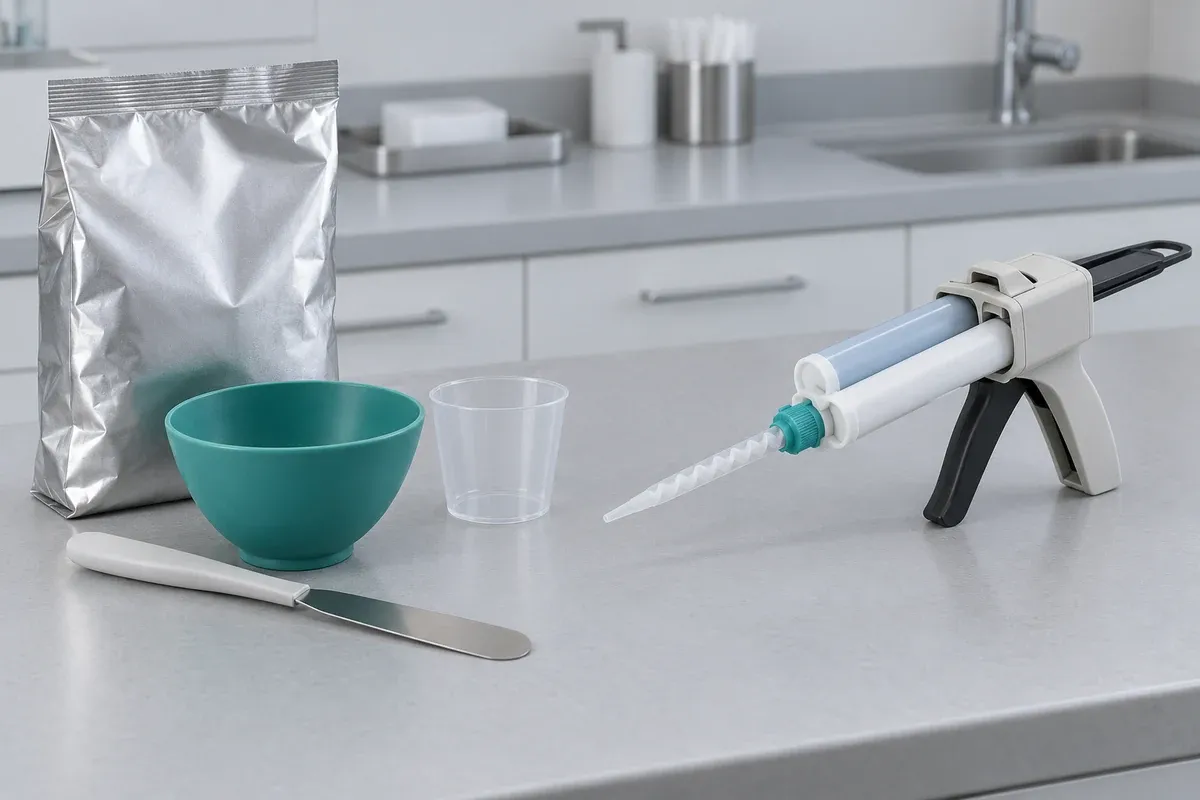
AI-generated equipment illustration. The two layouts represent dispensing approaches, not a performance test or a claim that Algident supplies a PVS system.
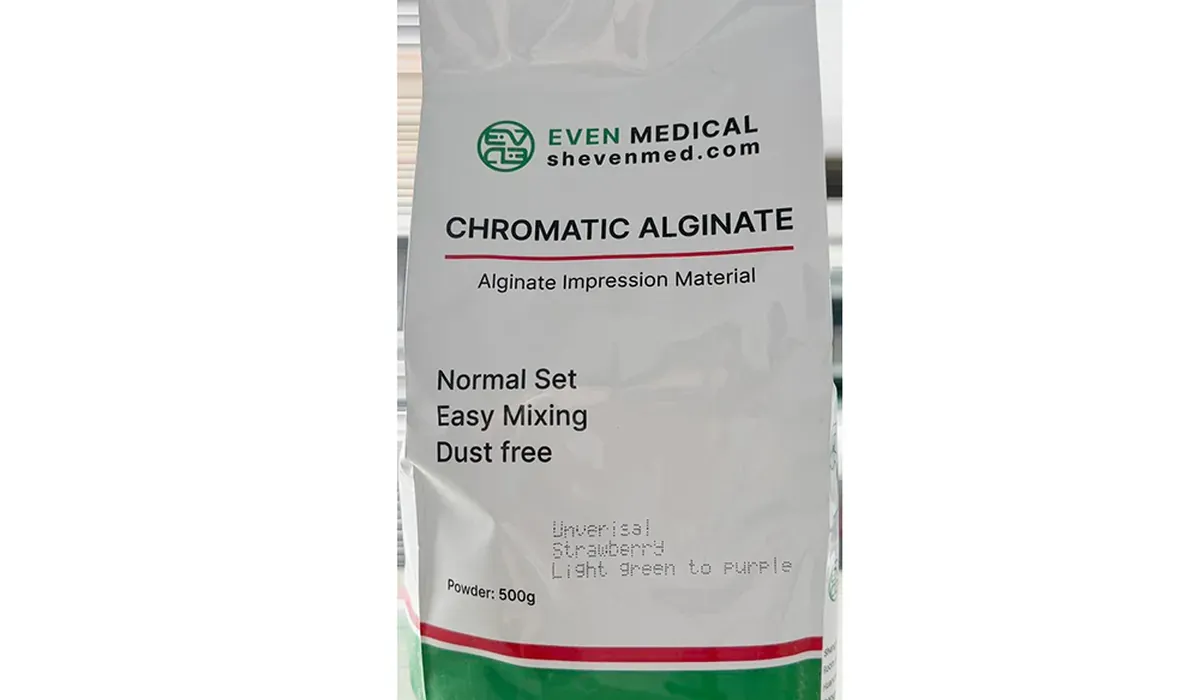
Algident's confirmed Universal total setting time is approximately 3 minutes. That does not establish the mixing or working time of every dental grade. Confirm the supplied version's instructions and conditions. Chromatic changes provide visual cues; they do not replace the IFU or confirm readiness on their own. See our chromatic handling guide.
Dust-controlled powder still requires the precautions in its SDS and IFU. Do not promise zero airborne particles or suggest that choosing alginate automatically makes severe undercuts, compromised teeth or orthodontic appliances safe to manage. Those are clinical assessments, not distributor selling points.
For unexpected results, use the seven-cause troubleshooting guide to record dosing, handling and batch evidence instead of assuming either material is defective.
4. Build the Order Around Confirmed Clinic Requirements
Ask the buyer to confirm the record required, selected product, laboratory location, pouring arrangements and dispensing setup. Then agree sample evaluation criteria with the clinic rather than prescribing a stock split without demand evidence.
Review Universal alginate before choosing a grade. For Algident's range, compare the dental grade guide, check the Technology page, and request the applicable product documents. Algident acts as a trading and export partner coordinating alginate selection, samples and available documentation with suppliers.
Send the intended use, grade, pack size, quantity and destination through WhatsApp +86 180 1638 1172. Review wholesale options or use our contact form to confirm the proposed supply. If the case requires a PVS system, keep that specification separate from the alginate quotation.