Oct 16, 2026Dental Guides
Alginate Impression Remakes: 7 Causes Clinics Blame on “Bad Powder”
Troubleshoot seven causes of alginate impression remakes, from dosing and tray support to storage and pouring, and learn what to record for a batch complaint.
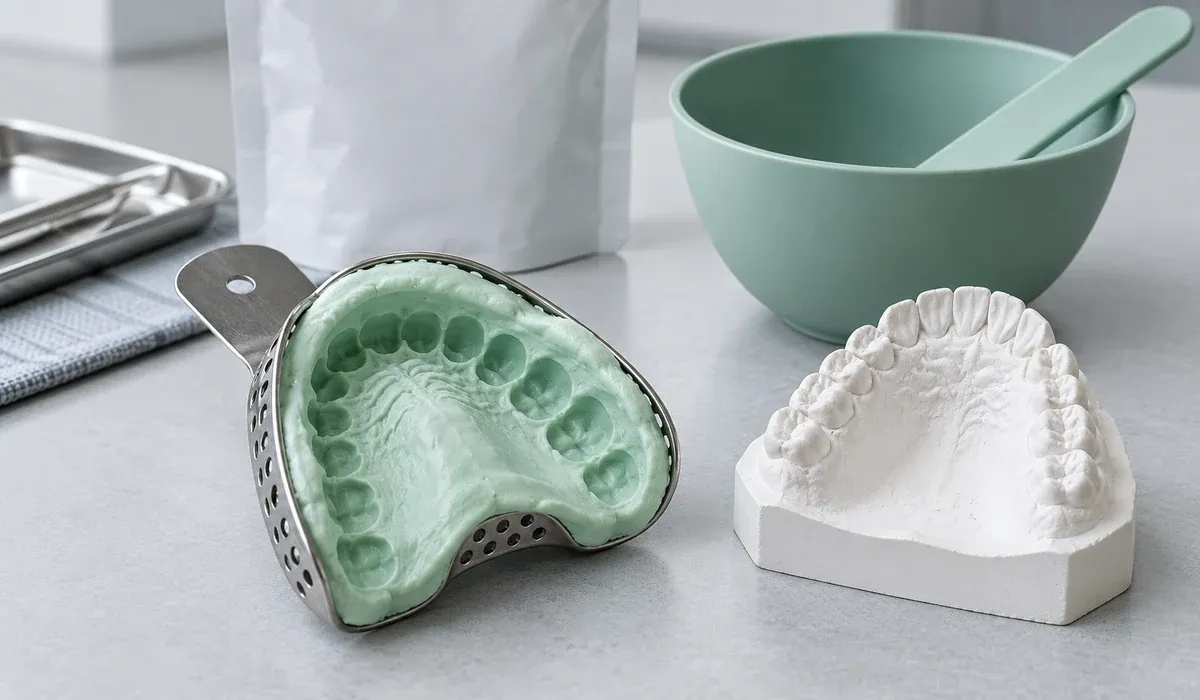
An alginate remake does not, by itself, prove that the powder is defective. Check dosing, mixing, temperature, tray support, removal, powder storage and post-impression handling before drawing a conclusion. These seven checks help clinics and distributors separate a handling problem from a batch concern—and collect useful evidence when the material does need investigation.
First locate the defect: in the mix, in the removed impression, or only in the poured model. A symptom can have several causes; use these checks alongside the supplied IFU and the clinician’s assessment.
Seven Causes to Check Before Blaming the Powder
1. Inconsistent powder and water measurement
Clue: One mix feels runny, another unusually stiff, despite using the same bag.
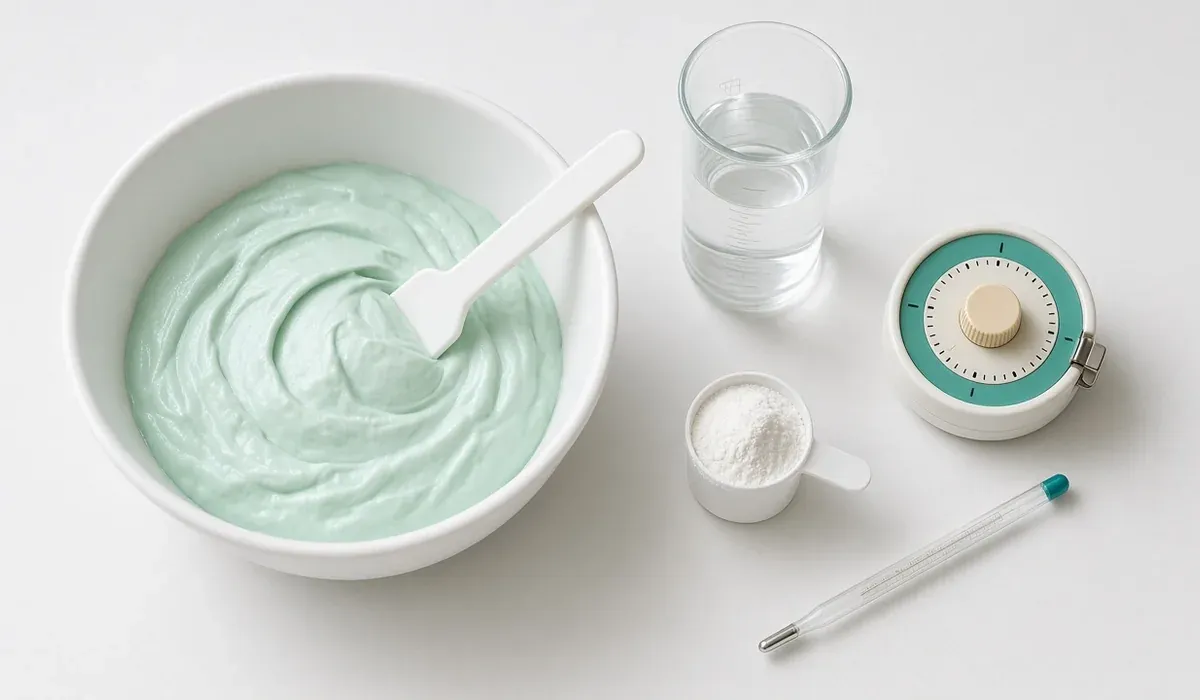
Check and correct: Record the actual powder mass and water volume. Check that staff use the measures supplied for that product and follow its dosing method. Do not borrow another brand’s scoop or add water by eye to improve the feel. If the bag, mixing card and technical sheet disagree, ask the supplier to confirm the applicable instructions before continuing the evaluation. See our Alginate Mixing Guide for handling context; the confirmed product instructions govern dosing.
2. Incomplete mixing or trapped air
Clue: Dry pockets, streaks or voids appear in the impression.
Check and correct: Inspect the bowl and spatula for residue and check whether all powder was incorporated. Follow the specified mixing method and time rather than whipping the mix to chase a smoother appearance. Record whether voids were visible in the impression before the stone was poured: defects appearing only in the model also require a gypsum-handling check.
3. Temperature and timing do not match the instructions
Clue: The mix starts losing flow before the tray is seated, especially after a change in room or water temperature.
Check and correct: Measure water temperature and record room conditions. Warmer water can shorten the available handling window. Prepare equipment before mixing and use the timing reference specified for the supplied version; do not change the ratio to slow setting.
Algident’s current confirmed Universal total setting time is about 3 minutes. Total setting time includes the earlier mixing and handling stages; do not restart that period after seating. Confirm the applicable timing conditions for the supplied product. High Precision, Super High Precision and customized fast-set versions need separate confirmation. Color stages may support handling, but do not replace the IFU; our chromatic alginate article covers that separate topic.
4. Poor tray fit, support or retention
Clue: Material pulls away from the tray, coverage is incomplete, or distortion appears after removal.
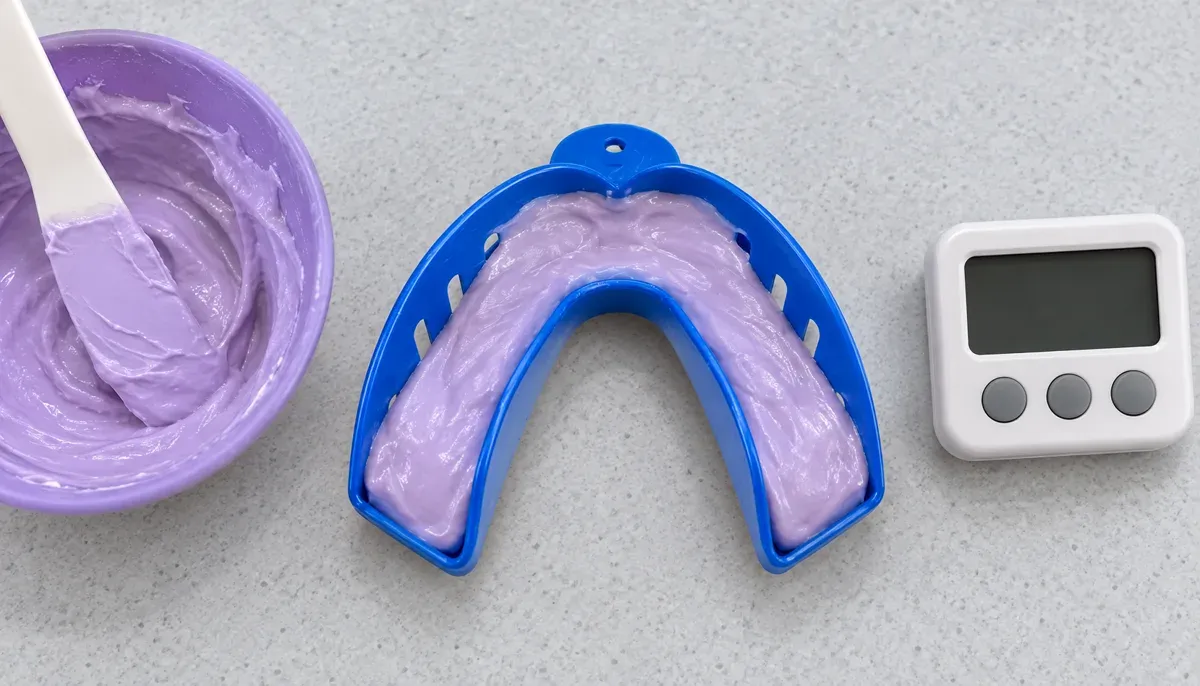
Check and correct: Have the clinician check tray fit, rigidity, coverage and retention before mixing. Use a tray system suitable for alginate; where adhesive is required, follow that adhesive’s instructions. More powder cannot compensate for an unsuitable tray. A defect concentrated in one unsupported area is a reason to inspect the tray setup, not proof of a powder fault.
5. Movement or removal before adequate set
Clue: Dragged detail, tearing or distortion is visible immediately after removal.
Check and correct: Review seating, tray movement, the set check and removal technique with the clinician. Keep the tray stable and follow the product’s set and removal instructions. Tears can also involve undercuts or thin material, so a longer wait alone may not resolve the problem. Inspect the impression before sending it to the lab.
6. Moisture exposure or poor powder storage
Clue: An opened pack develops clumps or behaves differently from a properly stored unopened pack.
Check and correct: Record the opening date, seal condition and storage history. Keep scoops dry and close the container promptly. Algident’s TDS specifies cool, dry storage below 25°C, away from direct sunlight, with the container tightly closed. Its unopened shelf-life statement does not establish a usable life after opening. Isolate suspect stock and ask for review; do not sieve out lumps and assume performance is restored. Read the storage guide.
7. Changes during disinfection, waiting or pouring
Clue: The impression initially looks acceptable, but the model later shows poor fit or surface defects.
Check and correct: Record the disinfectant, method, concentration, contact time and time to pouring. Follow compatible product instructions; do not extend immersion or leave the impression exposed to air. Pour promptly within the confirmed product limits. Do not assume extended-pour claims from another alginate apply to this one. Trace the handoff using our complete impression-to-cast workflow.
Build a Useful Batch Complaint
Keep the bag and batch number, expiry date, opening date, storage history, measured dosing, temperatures and observed timings. Photograph the dry powder, mix, impression and model where relevant, without patient identifiers.
A distributor can arrange a controlled bench comparison using the confirmed IFU, clean equipment and a properly stored reference pack, changing one factor at a time. Persistent abnormal behavior warrants supplier investigation. Retain suspect material and request the applicable batch COA and instructions; a reference comparison alone neither clears nor condemns a batch.
Request Technical Support from Algident
Send the grade, batch number, symptom, photos and handling log to WhatsApp +86 180 1638 1172. As a trading and export partner, Algident coordinates the supplied version’s instructions and available batch documents with the supplier before another evaluation.